Why Gen Z Is Choosing Blue-Collar Careers and What That Means for the Future of Work
By Rachel Merritt, Senior Director of Career Services, Ancora Education
For decades, the message to young people in America was clear: Earn a four-year degree, enter a white-collar profession, and stability will follow. But Generation Z is rewriting that narrative. Increasingly, young adults are choosing skilled trades and blue-collar careers, not as a backup plan, but as a deliberate, strategic choice rooted in economic reality, workforce demand, and a desire for meaningful, stable work.
As someone who works closely with employers, students, and workforce partners across the country, I see this shift unfolding every day. Gen Z’s move toward blue-collar careers doesn't signify a lack of ambition or the dismissal of the value of education; it’s about redefining what success looks like in a rapidly changing labor market.
To understand why this generation is embracing the trades, we must look honestly at the pressures shaping their decisions.
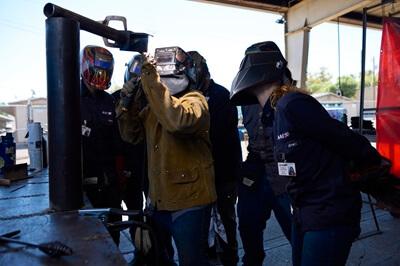 Students gain hands-on experience in combination welding during training at Arizona Automotive Institute in Glendale, AZ.
Gen Z is entering the workforce at a time of unprecedented disruption. Artificial intelligence is automating many of the entry-level office roles that once served as stepping stones for young professionals. Positions in marketing, administrative support, customer service, and even entry-level tech are increasingly being streamlined or eliminated altogether. For young people trying to get their foot in the door, those doors often feel closed before they even knock.
The issue of student loan debt also looms large. The cost of a traditional four-year degree has skyrocketed, and many Gen Z students have watched millennials graduate with tens of thousands of dollars in debt, only to struggle to find jobs that justify that financial burden. As a result, confidence in the traditional college-to-career pipeline seems to be eroding. Young adults are asking smarter, more pragmatic questions: Will this education lead to a job? How quickly can I start earning? What will my return on investment be?
For many, the answers point directly toward the skilled trades.
HVAC, electrical, welding, plumbing, and healthcare roles are careers that cannot be outsourced, automated, or replaced by AI. They require hands-on skills, technical knowledge, and human problem-solving, which are qualities that remain in high demand.
From a career services perspective, the appeal is clear. Skilled trades often offer faster entry into the workforce, competitive starting wages, and clear pathways for advancement. Instead of spending four or more years in school before earning a paycheck, many students can complete training programs in a fraction of the time and begin working in roles that provide immediate financial stability – some can even begin work before finishing their programs.
Gen Z is also deeply motivated by job security. Having grown up during economic uncertainty, a global pandemic, and widespread layoffs, this generation values reliability. And trades offer that. While no job is completely immune to economic cycles, skilled trade roles tend to be more resilient during downturns. Infrastructure still needs maintenance. Homes still need heating and cooling. Hospitals still need trained support staff. These realities matter to a generation that wants to build a stable future.
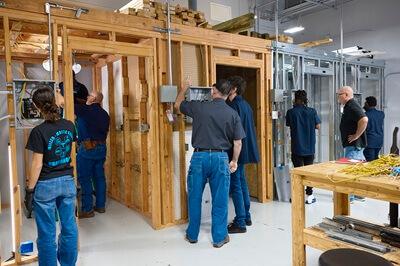 Students learn electrical fundamentals at Miller-Motte College in Chattanooga, TN.
Another factor driving this shift is the changing perception of blue-collar work itself. For years, trades were positioned as a “second choice” for those who didn’t succeed in traditional academic settings. That stigma is fading quickly. Today’s skilled trade careers are technical, specialized, and often entrepreneurial. With experience and additional certifications, many professionals move into leadership roles, management, or even business ownership.
When you factor in lower education costs, earlier workforce entry, and the demand rate, long-term earning potential in the trades could rival or exceed many white-collar professions. The idea that blue-collar work limits financial growth simply doesn’t hold up under scrutiny.
What is particularly interesting about Gen Z is how intentional they are about aligning their work with their values. This generation wants to see the impact of their labor. They want tangible results and a sense of purpose. Skilled trades provide that in substantive ways. When you fix a system, build a structure, or maintain critical infrastructure, the outcome is immediate and visible. There is pride in that work, and Gen Z recognizes it.
At Ancora Education, we see students choosing trades not because they lack options, but because they’ve evaluated their options carefully. Many come to us after considering or even starting traditional college pathways and decide they want something more direct, practical, and aligned with workforce demand. Others arrive knowing from the outset that they want career training that offers hands-on learning and real-world application.
Education providers have a responsibility to meet this generation where they are. That means offering training programs that are tightly aligned with employer needs, taught by instructors with industry experience, and supported by robust career services. Technical skills alone are not enough. Students also need guidance on professionalism, communication, and navigating the workplace. These are skills that aid long-term success beyond the first job placement.
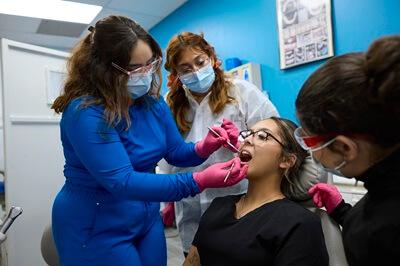 Dental assisting students gain practical experience at South Texas Vocational Technical Institute in Corpus Christi, TX.
Employer partnerships are equally critical. Strong relationships with hiring partners allow educators to understand evolving workforce needs and prepare students accordingly. When employers are involved in shaping curriculum and hiring graduates, everyone benefits. Students gain confidence, employers fill critical roles, and communities grow stronger.
The rise of blue-collar careers among Gen Z is a signal that the workforce landscape is changing. As AI reshapes white-collar work and economic pressures continue to mount, skilled trades will play an increasingly central role in America’s economy. The challenge now is for students, parents, educators, and policymakers to recognize the value of these paths and support them accordingly.
For Gen Z, choosing the trades is about choosing stability, opportunity, and purpose in a world that demands adaptability. As educators and workforce leaders, our role is to provide high-quality training, clear pathways, and elevate the respect afforded to skilled trades, so students feel confident choosing these career paths.
If we do that, we will be helping to shape a more resilient, inclusive, and future-ready workforce for everyone.